TRANSMISSION & DRIVETRAIN.
Managing torque transfer from the flywheel to the pavement.
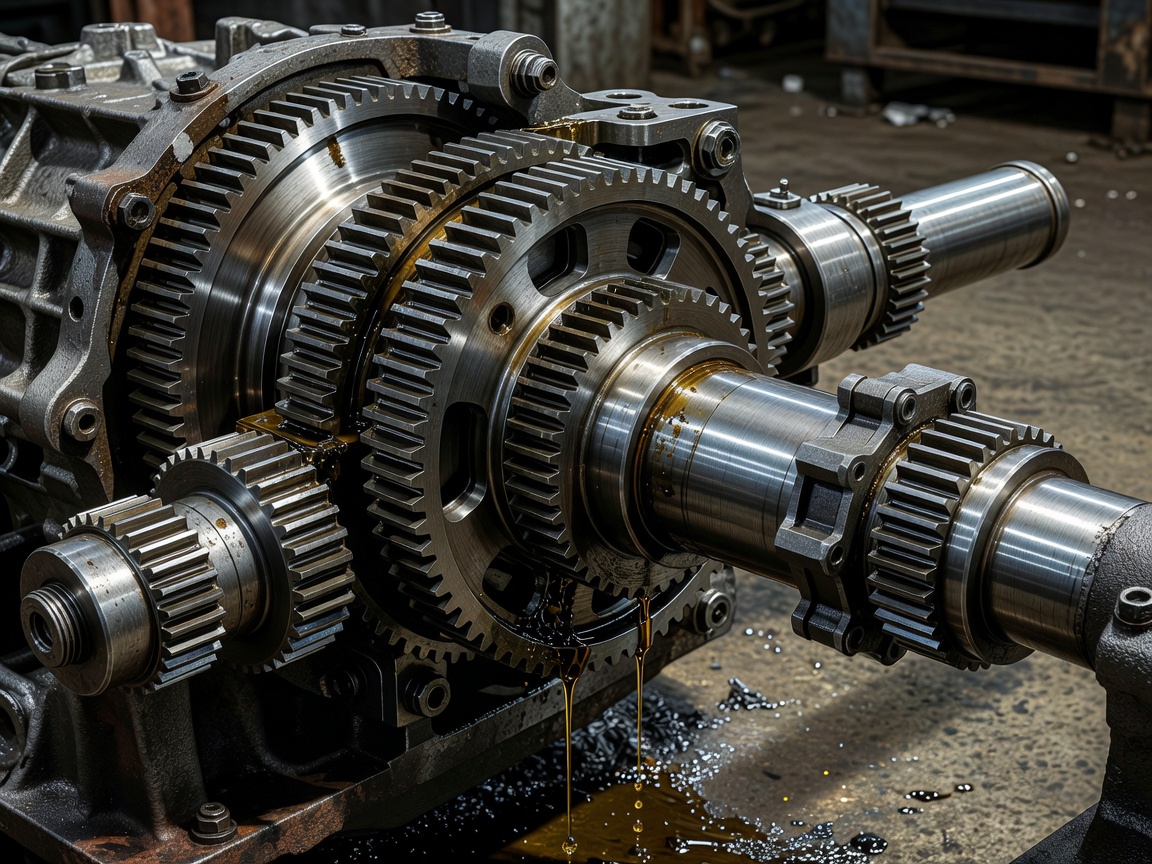
The Shift to Automated Manual Transmissions (AMT)
The commercial trucking industry has undergone a massive paradigm shift from traditional, unsynchronized manual gearboxes (such as the classic 10-, 13-, and 18-speed configurations) to Automated Manual Transmissions (AMTs). It is crucial to distinguish an AMT from a traditional torque-converter automatic transmission. AMTs retain a standard clutch and gearbox architecture but utilize pneumatics and electro-mechanical actuators controlled by a Transmission Electronic Control Unit (TECU) to handle shifting and clutching events.
The primary advantage of the AMT is fuel efficiency optimization through precise shift mapping that keeps the engine in its optimal torque band. From a maintenance perspective, however, AMTs introduce complex sensor arrays—including input/output shaft speed sensors, XY shifters, and pneumatic control modules—that require advanced diagnostic software to calibrate and troubleshoot.
Clutch Maintenance and Replacement Protocols
Regardless of whether a truck runs a pure manual or an AMT, the clutch assembly remains the critical friction interface. Heavy-duty clutches are massive, often 15.5-inch twin-plate ceramic designs capable of handling upwards of 2,000 lb-ft of torque.
- Adjustment Procedures: Traditional manual clutches require regular free-play adjustment to prevent slipping and release bearing damage. Self-adjusting clutches are standard on AMTs but still feature wear indicators that technicians must physically inspect during preventative maintenance.
- Release Bearings and Linkage: Proper lubrication of the release bearing and cross-shaft bushings is critical. Over-greasing can lead to grease migration onto the friction plates, causing aggressive clutch chatter and premature failure.
- Replacement Tolerances: When replacing a clutch, resurfacing or replacing the flywheel is mandatory. Dial indicators must be used to measure flywheel housing concentricity and runout. Excessive runout will lead to rapid pilot bearing failure and clutch vibration.
Fluid Tribology and Gear Gearing
Heavy-duty transmissions and differential carriers do not use standard motor oils. They rely on specific synthetic gear lubricants (typically SAE 50 or 75W-90) formulated for extreme pressure. The tribology (study of friction, wear, and lubrication) of these fluids dictates maintenance intervals.
Routine fluid analysis is a powerful diagnostic tool. By sampling gear oil during scheduled PMs, technicians can identify microscopic metal particulates. High levels of iron indicate gear face wear, while copper or brass suggests synchro or thrust washer degradation. Catching this early prevents catastrophic lock-ups on the highway.
Driveline Phasing and U-Joints
The driveshaft acts as the critical bridge connecting the transmission to the differential(s). Its geometry must be flawless to prevent driveline vibration.
| Drivetrain Component | Maintenance Check | Failure Symptom |
|---|---|---|
| Universal Joints (U-Joints) | Check for radial/axial play and grease extrusion. | Clunking on acceleration, severe highway vibration. |
| Carrier Bearing | Inspect rubber isolator for tearing and bearing rotation. | Low-frequency rumble, shuttering under load. |
| Slip Yoke | Ensure smooth plunge action and adequate lubrication. | Thrust shock upon stopping or starting. |
Driveline phasing ensures that the yokes at opposite ends of a driveshaft are correctly aligned. If a two-piece shaft is separated during service and reassembled out of phase, the irregular rotational velocities will cause violent vibrations that can destroy transmission tail-shaft seals and differential pinion bearings within hundreds of miles.
Conclusion
Drivetrain maintenance requires an intersection of mechanical precision and electronic diagnostic capability. Tolerances are tight, and the torque loads are immense. Strict adherence to torque specs, fluid intervals, and alignment geometries ensures that the engine's power is efficiently and safely transferred to the road surface.